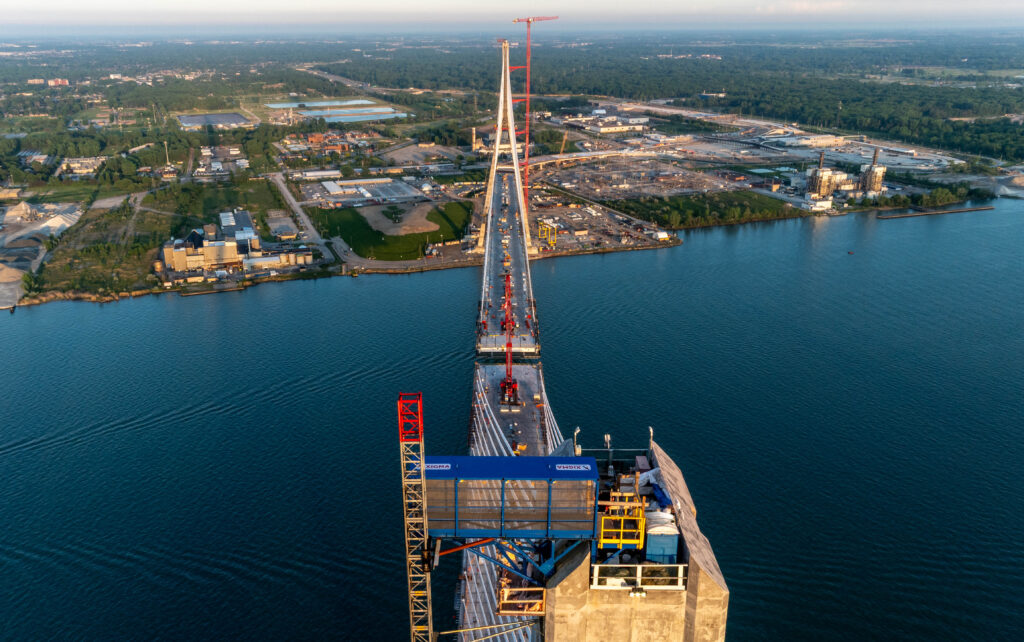
If you’ve been flying your drone and enjoying the experience, there’s good news. You can turn this passion into a side hustle or full-time work once you pass the Part 107 exam. Named after Title 14 of the Code of Regulations (14 CFR Part 107), introduced in August, 2016, Part 107 gives pilots the ability to profit from their drone work. It’s relatively inexpensive to get certificated. If you don’t have a background in aviation, however, it’ll take an investment of time and resources. Here’s how to prepare for success.
Preparing for the Test
As an admin for two major drone-related forums, I’ve seen this question pop up countless times: “How should I study for the Part 107 exam?” A common answer that surfaces in the comments section is a variation of “just watch some YouTube videos, it’s free.” While that approach may work for some people, it’s not a reliable strategy.
The FAA is always updating the Part 107 test questions to reflect current industry standards, and you might be caught off guard. Anyone on social media can position themselves as an expert. If the person teaching the material isn’t responsible for keeping it accurate or up-to-date, you could be studying the wrong information without realizing it. As someone who tried YouTube videos first, I found major gaps in the “training” presented.
A structured course will save you a surprising amount of time otherwise spent looking for more information on specific topics or piecing everything together. Programs like those offered by Pilot Institute (disclaimer: I have worked with this company on a professional basis) walk you through the material in the same order it appears on the exam, explain why the rules exist, and give you practice questions along the way.
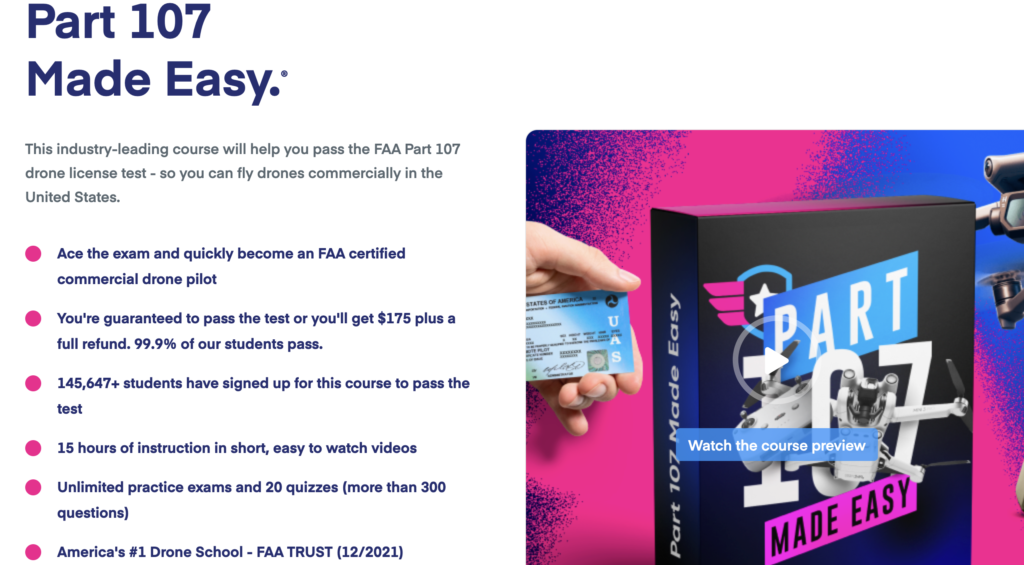
Instead of memorizing answers to pass a test, you’ll actually understand concepts like airspace, weather reports, and sectional charts. The latter topic is what I recall being tested on the most, and it is quite complex. All of this knowledge becomes important later on when you’re making real-world decisions in the field.
All that said, if you prefer to go the self-study route, the next step is to register for the exam.
Scheduling Your In-Person Part 107 Exam
Before scheduling your exam, you must first create an account with the Integrated Airman Certification and Rating Application (IACRA) system to obtain your FAA Tracking Number (FTN). This number is required to register for the Part 107 knowledge exam and will be used throughout your certification process. Registration takes around 10 minutes and is an essential first step before you can schedule your test at a PSI center.
The FAA uses PSI Test Centers to administer the Part 107 knowledge exam. These facilities handle all types of professional certifications, from beauticians to commercial truck drivers, so availability can vary by area. You’ll have your own workstation with a computer, and you’ll be provided with supplemental materials for reference during the exam. Based on personal experience, I recommend booking your exam at least two weeks in advance to ensure you get a time slot that works with your schedule.
The test itself is straightforward. You’ll have two hours to complete 60 multiple-choice questions, each with three possible answers. The FAA also includes a few unscored test questions that are being evaluated for future exams. You won’t know which ones they are, so treat every question with equal consideration.
If you get stuck on a question, don’t panic. In most cases, one multiple-choice answer stands out for being clearly incorrect. You can eliminate that option, giving yourself a 50/50 chance of selecting the right answer. Once you complete the test and confirm your final answers to each question, the system will grade your exam and give you the results immediately.
You’ll need to answer at least 42 questions correctly, equivalent to 70%, to pass and move on to the final steps in this process.
What to Expect After You Pass
Once you’ve completed the test and received your results, you’ll need to log back into your existing IACRA account to start your Remote Pilot Certificate application. Select “Start New Application,” then choose “Pilot” as the application type, “Remote Pilot” for certifications, and follow the prompts. You’ll need to enter the 17-digit Knowledge Test Exam ID from your test results. It may take up to 48 hours from your test date for the Knowledge Test to appear in the IACRA system.
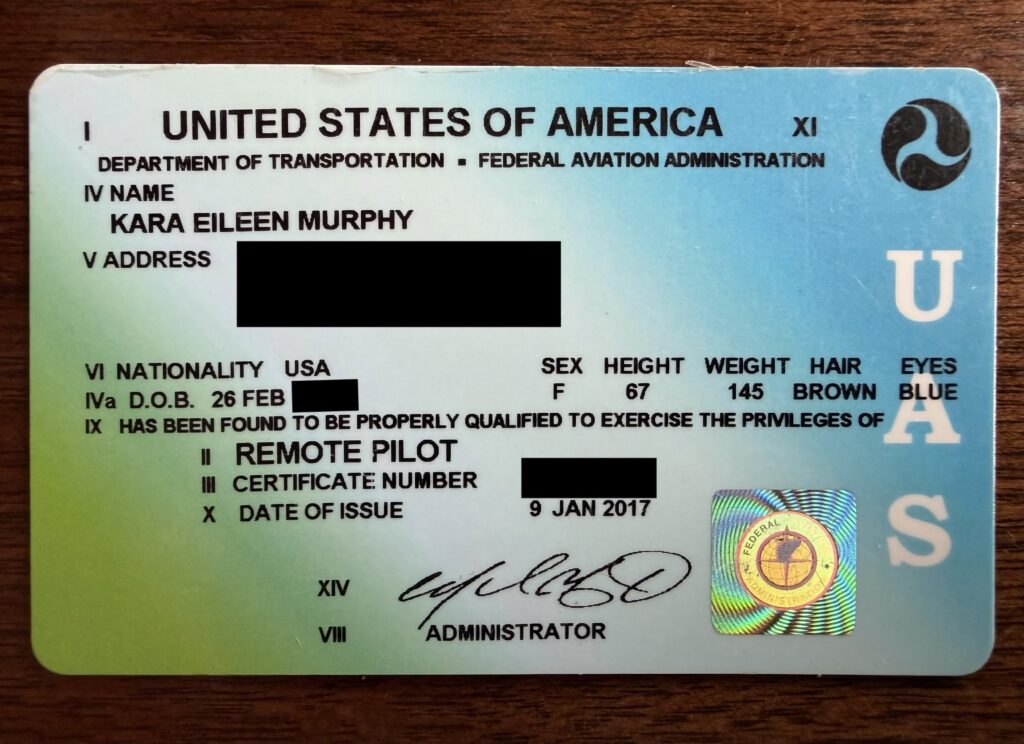
IACRA will issue a temporary certificate that you can print out and use immediately. Keep this document on you while flying, as it serves as your proof of certification while the FAA processes your permanent card. It typically takes a couple of weeks to arrive by mail. Hopefully it never takes as long as 6-8 weeks, but that is possible.
Outside the United States?
The Part 107 certificate is specific to the FAA, but other countries have their own equivalents for commercial work. Under the European Union Aviation Safety Association (EASA), commercial operations typically fall under the Open or Specific categories, depending on risk level.
In the United Kingdom, through the Civil Aviation Authority (CAA), commercial drone operations follow a slightly different structure. Pilots are required to complete a theory exam and training course, often online, before applying for operational authorization through a General Visual Line of Sight Certificate (GVC).
To operate commercially in Australia, the Civil Aviation Safety Authority (CASA) requires a Remote Pilot License (RePL) for most operations. Additional approvals may also be required depending on the scope of the work.
One key difference compared to other regions, including the United States, comes down to liability insurance. Commercial operators in the UK are required to carry it, whereas in the United States, insurance is not required under Part 107 operations. That being said, many clients will expect you to have coverage.
Some Final Thoughts
Passing the exam is only the beginning of your journey. And what can be given can also be taken away. Recently, the FAA revoked Part 107 privileges from pilots who flew inside Temporary Flight Restrictions (TFRs) without authorization. Others have been fined for conducting commercial operations without certification.
Another rule that can potentially get overlooked involves alcohol. While you may legally drive a car after a drink, you cannot operate a drone within eight hours of consuming alcohol. Aviation regulations treat impaired flying seriously, whether you’re in a cockpit or simply holding a remote controller.
Congratulations on becoming a Part 107 certificated pilot. You can now charge for your services during daylight hours. If you’d like to operate commercially at night, the FAA allows it. But you must complete the Recurrent Exam first, and then every 24 calendar months after, to remain compliant. This will be covered in-depth in the final article of this series, “Staying Current, and Flying at Night, with Your Part 107.”